AI for Personalized Learning

AI-driven learning

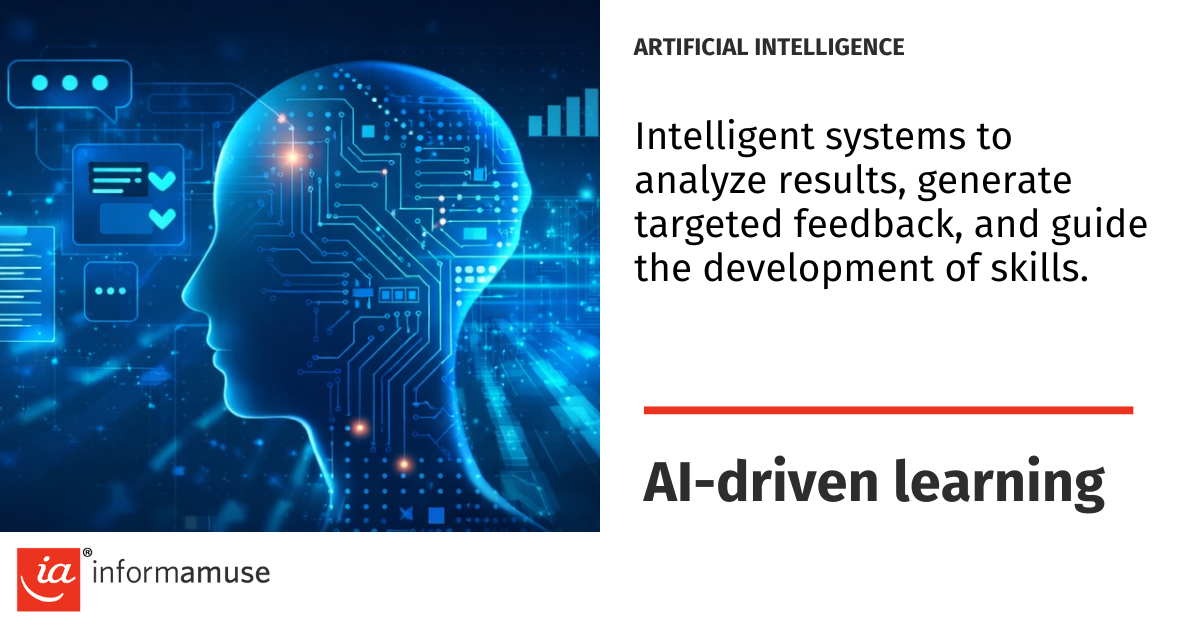
Artificial intelligence for personalized learning represents today a strategic tool for improving the effectiveness of digital learning pathways. Through the automatic analysis of results, the generation of targeted feedback, and personalized recommendations, users can be supported in a more informed, data-driven growth journey.

A smarter, results-oriented learning experience

Over the past months, our team has designed and integrated intelligent components within an advanced learning platform, with the goal of delivering a more personalized, interactive, and results-oriented experience.

Thanks to solutions based on machine learning principles and data analysis, the system is able to:

  • automatically analyze the results of users’ learning activities;

  • generate clear and personalized feedback;

  • suggest targeted content to effectively support skills development.

Turning data into learning value

Artificial intelligence–based solutions for personalized learning make it possible to transform data generated by educational activities into useful and immediately actionable insights. The system interprets user performance, identifies areas for improvement, and recommends tailored content, fostering progressive learning paths that are truly centered on individual needs.

The adopted approach transforms raw data into valuable information, improving the effectiveness of learning pathways and enabling users to access intelligent recommendations built around real individual needs. This data-driven approach enhances the quality of the learning experience, reduces the gap between assessment and corrective action, and supports continuous skills development.

The technology ecosystem behind intelligent features

At the core of these capabilities lies an ecosystem of advanced artificial intelligence techniques and tools, including large language models (LLMs), semantic search and embedding systems, data augmentation strategies, and retrieval mechanisms based on RAG and agentic RAG.

These components make it possible to enrich responses with reliable contextual information (web grounding), improve the quality of recommendations, and effectively support skill growth and upskilling processes, also through the integration of cloud-based AI models and dedicated AI tooling.

This innovation represents a further step toward a data-driven learning experience, capable of dynamically accompanying users throughout their learning journey.

Learn more about artificial intelligence and digital transformation in education on the European Commission’s Digital Education Action Plan.

Stay tuned!

SafeForPorts +

safeforport plus

The SafeForPorts project, to which InformAmuse contributed actively together with Tenova e Prosoft Intesys S.r.l., was successfully completed in August 2025. Considering the value of the results achieved, an extension was granted until December 2025 with the launch of SafeForPorts+, which consolidates and enhances what has been developed so far.

Among the main achievements of InformAmuse:

  • development and consolidation of the on-site software architecture;

  • implementation of the AI Module for the automatic recognition of anomalies and wear, deployable on edge to enable real-time predictive maintenance.

MV Maintenance also contributed actively to the project: thanks to its expertise and support during on-site trials, it made it possible to test the system under real operating conditions, thus facilitating the validation of the developed solutions.

The project, carried out within the RAISE (Robotics and AI for Socio-economic Empowerment) initiative supported by Italy’s PNRR and the European Union – NextGenerationEU, integrated VR simulation for the training of ship unloader operators and on-field systems based on wearable devices and computer vision, supporting predictive maintenance and hands-free operational workflows.

With SafeForPorts+, the work carried out is further validated and extended. The main innovations include:

  • an enhanced VR training environment, which introduces kinematic variables such as hold depth and trolley travel, while also simulating new types of ship unloaders;

  • an advanced on-field support system, integrating thermographic data into the wearable device, expanding diagnostic capabilities and paving the way for multimodal models based on both visible and infrared imaging.

Stay tuned!

safeforport plus

AI for company in environmental monitoring

openia and environmental monitoring

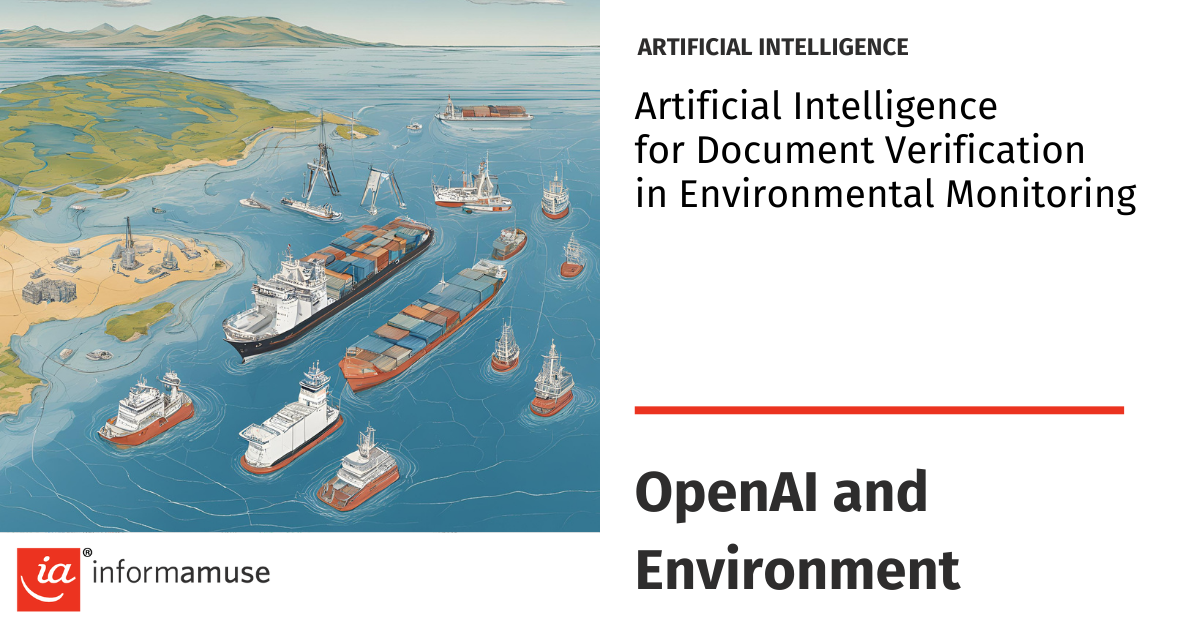
In recent years, artificial intelligence (AI) has transformed many sectors, and environmental monitoring is no exception. AI technologies, along with advanced solutions like OpenAI, are revolutionizing data management and document verification, increasing the efficiency and accuracy of environmental control processes.

The Importance of Document Verification in Environmental Monitoring

In environmental monitoring, data collection and analysis are crucial for assessing the impact of human activities on the environment. Governments, companies, and organizations gather vast amounts of data from sensors, satellites, and field studies, often accompanied by technical reports and regulatory documents. Document verification ensures that this information is accurate and complies with current regulations—a complex task that artificial intelligence can greatly simplify.

How Artificial Intelligence is Transforming the Process

With OpenAI and other AI solutions, a significant part of the document verification process can be automated. AI quickly analyzes large volumes of documents and data, identifying potential errors or anomalies that might go unnoticed by the human eye.

  1. Automated Data Extraction

A key aspect of document verification is the extraction of relevant data. Through machine learning, AI can be trained to recognize and collect key information from various types of documents, such as technical reports or environmental regulations. For example, in water quality monitoring, AI can automatically extract pollution levels and compare them with regulatory limits.

  1. Compliance Verification

With AI, it’s possible to automatically compare collected data against national and international regulations. An AI-based system can analyze thousands of pages of regulations, flagging potential non-compliance issues in a timely and efficient manner.

Benefits of AI in Document Verification

Artificial intelligence reduces human error, speeds up manual processes, and optimizes business resources. AI solutions ensure data always comply with regulations, providing greater operational efficiency.

Integrating AI into environmental monitoring processes represents a step toward sustainability, helping companies make more informed decisions and reduce their environmental impact.

IoT in Water Resource Management

iot water resources managment

Revolutionizing Water Resource Management with IoT Technologies

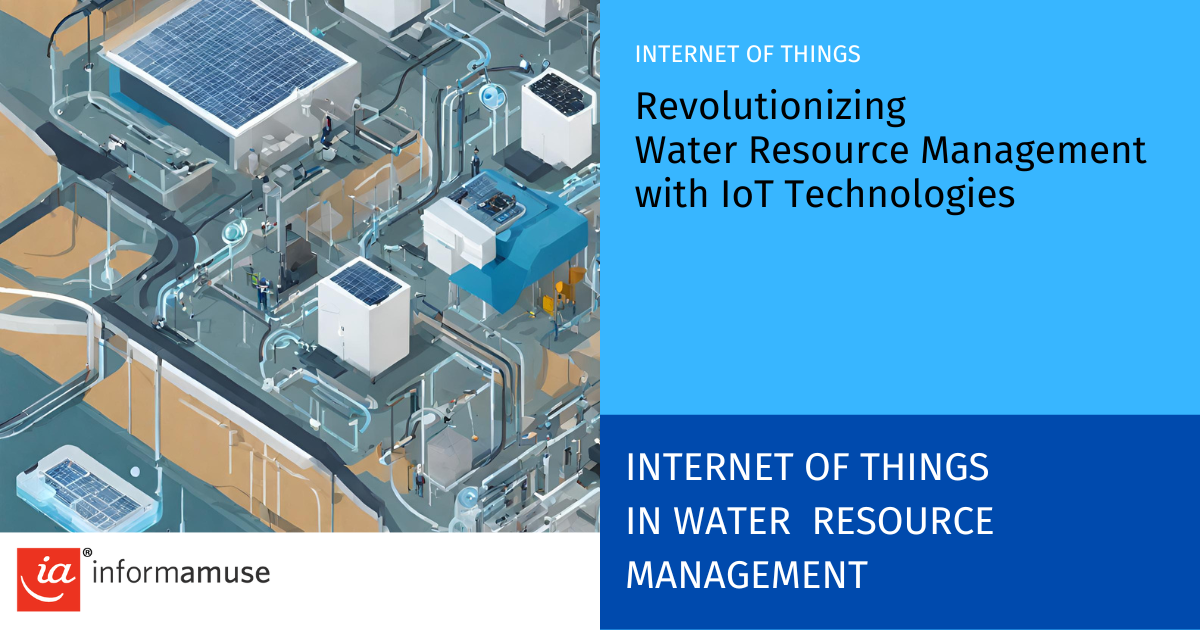
In the quest for sustainable resource management, the integration of Internet of Things (IoT) technologies has emerged as a game-changer, particularly in the realm of water resource management. With water scarcity becoming an increasingly pressing global issue, the ability to monitor, analyze, and optimize water usage has never been more critical. IoT solutions offer precisely the tools needed to address these challenges effectively.

1 Real-time Monitoring IoT in Water Resource Management

IoT sensors can be deployed across various water infrastructure components, including pipelines, reservoirs, and treatment plants, enabling real-time monitoring of water quality, flow rates, pressure levels, and leak detection. This continuous data collection empowers water managers to promptly identify anomalies, potential leaks, or contamination events, thus facilitating swift response measures.

2 Data Analytics

The vast amounts of data generated by IoT sensors can be analyzed using advanced analytics techniques such as machine learning and predictive modeling. By harnessing this data, water resource managers can gain valuable insights into consumption patterns, demand fluctuations, and infrastructure performance. These insights enable informed decision-making, allowing for proactive maintenance, resource allocation, and demand forecasting.

3 Optimization and Efficiency

IoT-enabled smart water systems facilitate optimization and efficiency improvements across the entire water supply chain. By dynamically adjusting water distribution based on real-time demand and supply conditions, these systems can minimize losses, reduce energy consumption, and optimize resource utilization. Additionally, IoT-driven automation can streamline operational processes, leading to cost savings and enhanced reliability.

4 Remote Management and Control

IoT platforms enable remote monitoring and control of water infrastructure, providing flexibility and scalability for managing distributed systems. Whether it's adjusting valve settings, regulating pump operations, or implementing demand-based scheduling, remote management capabilities empower water utilities to efficiently manage assets and respond promptly to changing conditions, regardless of geographic location.

5 Environmental Sustainability

By promoting efficient water usage and reducing wastage, IoT technologies play a crucial role in promoting environmental sustainability. By conserving precious water resources and minimizing energy consumption in water treatment and distribution processes, IoT-driven solutions contribute to mitigating the environmental impact of water management practices.

6 Stakeholder Engagement

IoT platforms can also enhance stakeholder engagement by providing transparency and real-time access to water usage data. By empowering consumers with information about their water consumption patterns and associated costs, IoT technologies promote awareness and encourage responsible water usage behaviors among individuals and businesses alike.

In conclusion, the integration of IoT technologies holds immense potential to revolutionize water resource management practices. By providing real-time insights, optimizing operations, and promoting sustainability, IoT-driven solutions offer a holistic approach to addressing the challenges of water scarcity and ensuring the efficient utilization of this vital resource. As we navigate the complexities of water management in an increasingly water-stressed world, embracing IoT innovations will be key to building resilient and sustainable water systems for future generations.

Innovation in port operations

safeforport news

We are pleased to collaborate with Tenova  and Prosoft Intesys S.r.l.  to the #SafeforPorts project, recently awarded in response to a CFP from Istituto Italiano di Tecnologia and RAISE Liguria.

SafeForPorts aims to revolutionize the maritime industry with cutting-edge Industry 4.0 technologies to enhance safety and efficiency in port operations, prioritizing the safety of machine operators during training, operation, and maintenance phases.

Through #VR simulators and Computer Vision algorithms, we’re creating a comprehensive solution for remote training and on-field assistance for bucket ship unloaders – rail-mounted mobile units typically installed on port docks.

Informamuse will contribute in the creation of voice-controlled applications dedicated to mobile devices, in the implementation of personalized video communication systems based on WebRTC and in the management of solutions that exploit AI techniques.

Specifically in the field of port innovation we will deal with:

  • customize a remote video assistance system that will allow the operator to contact, through a hands-free system, an expert operator to achieve remote support during the movement of the machine
  • develop a software solution to allow execution of handling and maintenance workflows on hands-free devices
  • define and implement algorithms based on Computer Vision and Artificial Intelligence techniques for automatic maintenance procedure

Special thanks will go to MV Maintenance for their valuable support and availability during the on-site testing activities, which will significantly contribute to the success of the project.

safeforport news

COBOL Migration

migrazione cobol news

In the ever-evolving landscape of technology, businesses are constantly faced with the challenge of adapting legacy systems to meet the demands of the digital age. One such challenge is the migration of COBOL (Common Business-Oriented Language) applications, which have been the backbone of many critical business operations for decades. As newer technologies emerge and the need for agility and scalability increases, organizations are exploring strategies to modernize their COBOL-based systems.

COBOL, with its robustness and reliability, has been the cornerstone of numerous industries, including banking, finance, and government sectors. However, the language's age and inherent limitations in integration with modern technologies have made COBOL migration a pressing concern for many enterprises.

So, what does COBOL migration entail, and how can businesses navigate this complex process?

  1. Assessment and Planning: The first step in any migration journey is a comprehensive assessment of the existing COBOL applications and their dependencies. This involves analyzing the codebase, identifying obsolete functionalities, and assessing the compatibility with modern platforms and architectures. A detailed migration plan should be developed, outlining the goals, timelines, and resources required for the transition.
  2. Choosing the Right Approach: There are several approaches to COBOL migration, each with its pros and cons. Organizations can opt for a full rewrite of the application using modern programming languages, rehosting on a cloud platform, or encapsulating COBOL code within a wrapper to enable integration with newer systems. The choice of approach depends on factors such as budget constraints, time frame, and the desired level of disruption to business operations.
  3. Ensuring Data Integrity: Data is at the heart of any business operation, and ensuring its integrity during the migration process is paramount. Organizations must implement robust data migration strategies, including data cleansing, transformation, and validation, to prevent loss or corruption of critical information.
  4. Testing and Quality Assurance: Thorough testing is essential at every stage of the migration process to identify and rectify any issues or discrepancies. Automated testing tools can streamline the testing process, ensuring the reliability and functionality of the migrated application before deployment.
  5. Training and Support: Transitioning to a new system requires adequate training and support for the end-users. Employees should be provided with training sessions to familiarize themselves with the new interface and functionalities. Additionally, ongoing technical support should be available to address any issues or concerns that may arise post-migration.
  6. Continuous Improvement: COBOL migration is not a one-time endeavor but an ongoing process of adaptation and refinement. Organizations should continuously monitor the performance of the migrated application, gather feedback from users, and implement updates and enhancements to optimize efficiency and usability.

In conclusion, COBOL migration represents a significant undertaking for organizations reliant on legacy systems. By following a systematic approach, leveraging the right tools and expertise, and prioritizing data integrity and user satisfaction, businesses can successfully navigate the journey towards modernization and ensure the longevity and competitiveness of their IT infrastructure in the digital era.

Our presence at Blockchain Master directed by Professor Roberto Garavaglia

Our team is highly specialized with continuous updates to build innovative solutions based on latest technologies. This is why the Experis Academy chose us to administrate the Blockchain Master’s teaching.

InformAmuse at Blockchain Master

The Engineer Gioacchino Vaiana flies to Bergamo to apply his technical skills in the field blockchain.
Gioacchino, our Blockchain expert, is continuously updated to build innovative solutions in the field of blockchain. His determination and his passion for new technologies enabled him to create, with the help of the rest of technical team, the permissioned Meditchain Blockchain network used as a base for the Meditchain Consortium’s infrastructure – “The Mediterranean Blockchain”.

After helding the course “Blockchain and Hyperledger Fabric Technologies” for the participants of the Meditchain network, it is an honour for us to see the Engineer Vaiana hold the teaching alongside the expert in Blokckchain and Digital Payments Roberto Garavaglia.

High-education Blockchain Master

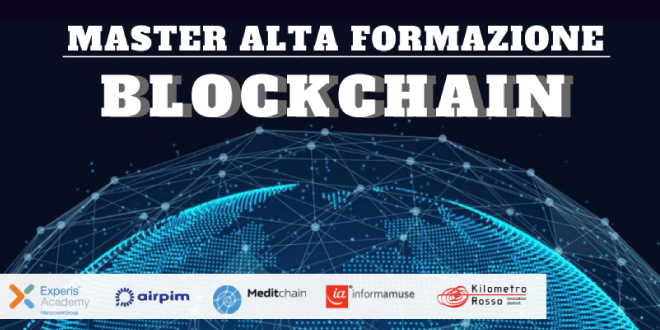
The Blockchain Master , organized by Experis Academy, is focused on engineers and professionals’ talent growth in the field blockchain and Information Technology and is held in synergy between InformAmuse, Meditchain and Airpim, at the Kilometrorosso headquarters in Bergamo. The main topics will be:

  • The fundamentals of Blockchain
  • Theory and techniques of Distributed Computing
  • Technological development scenarios analysis
  • Cross-industry strategic development sectors
  • Regulation and legal aspects
  • The Blockchain’s potential
  • Sustainability of investments in block chain projects
  • Employment in government contexts
  • The future of cryptocurrencies

Companies, students and experts will design new solutions in the field of blockchain. The Master will have a duration of 200 hours and is for of 20 participants, at maximum. Sign up, here.

Wine&Senses, drink wine with all five senses in order not to forget

vigne e cantine

According to the ISTAT analysis, published on “I Numeri del Vino”, 28.6 millions of Italian people consume wine. The survey of 2017 is based on occasional wine consumers and it has emerged that the 65% of the population over 11 years consumes wine, of which 25% women and 31% men.

Drinking Wine Culture

It is spreading a new trend that celebrate the consumption of wine linked to quality more than quantity. The wine world is changing and the new trend is to enjoy the wine not only to drink it.

“Life is beautiful if you drink good wine (La vita è meravigliosa se bevi buon vino)” is Stefano Milioni’s book who identify four wine consumers classes and each of them represents a different way to appreciate a glass of red or white wine: Illiterate, Literacy, Graduate and Acculturated which represent the various stadiums of wine knowledge, from the illiterate to the graduated one.

The Acculturated figure seems to be that one more in fashion. He symbolizes the classical person who goes over the taste and wine cellars and wine's firms, revolutionizing their own core business, help him to feel with all his senses and to live places and gastronomy through a unique sensory experience.

Wine&Senses, the wine and the five senses

Wine is a magnet for the “oenotourist” who combines a good glass of wine to the food that is tasting, to the emotions and the feelings that he is living.

Oh yes is true, the wine combines all five senses and this is the aim of Wine&Senses project: activity far from massive tourism to live regions and places enjoying visits and excursions, tastings in unique places, visits for wine cellars and vineyards, showcases in historical buildings to be enjoyed in augmented reality involving all the senses to offer sensorial experiences to the wine lovers.

Hi-tech solutions for business

We have been participated to the COS-TOURCCI-2017-3-03 – COSME "Supporting the promotion and development of transnational thematic tourism products linked to cultural and creative industries" - EASME - European Commission call, to develop ICT solutions, among which mobile app, augmented reality, gps track, that helps to discover and to promote W&S regions, products, events and runs in innovative way equipping the oenoturist with tools to live unique sensorial experience.

We are going to collaborate with other partners coming from areas with an important cultural and wine heritage to offer innovative solutions developed for wine tourisim: Italy with Ente Parco CinqueTerre, Portugal with RESEAU EUROPEEN DES VILLES DU VIN Recevin, Spain with AGRUPACION EMPRESARIAL INNOVADORA PARA LA CONSTRUCCION EFICIENTE - Aice and CULTUR VIAJES PATRIMONIO SL  - Cultur, Czech Republic with NARODNI PAMATKOVY USTAV - NPU and Hungary with MADI KOR BOR-EREDETVEDELMI KOZHASZNU EGYESULET - Mad circle.

Aims

The project is just begun but soon it will guarantee to tourists and wine lovers to bathe totally in the wine and to wine’s firms the possibility to communicate the proper brand with an enthusiastically marketing tool.
Follow our challenges

AN APP TO TICKLE YOUR BUSINESS

digital business

In Italy digital payments are a conversation topic in the last years. This type of payments represents a bridge between who pay and who gets money, like the system behind e-commerce, ePayment, Mobile pos, and contactless payments. A new mode that wowed millions of Italians.

Payments made comfortably, without pulling out the wallet to count banknotes and coins are growing fast. Just think of all online payments from shopping to buy furniture, from coffee to airfare, we could say that there are no limits.

Digital payments thought for enterprises and consumers

The reasoning behind the "digital" concept is to simplify consumers and businesses lives in term of time and money by decreasing the gap between who pays and who gets money. Nowadays to complete a transaction is very easy, you have just to use your smartphone and download an app.

Thanks to apps you can monitor your transactions, set max amounts and be alerted when exceeding the pre-set threshold, get the expense note automatically and so many other options that make the management of your credit card easier and in a totally digital way.

Open banking and PSD2

With the entry into force on 13 January 2018 of PSD2, Payment Services Directive, begins the so-called "digital transformation" of the banking world. PSD2 allows users, who use a current account to carry out payments or to access to the bank reports  using a software achieved by authorized third parties like PISPs (Payment Initiation Service Providers) and AISPs (Account Information Service Providers); that means it is possible to make a transaction from your own account without using a credit card and to aggregate information about personal bank accounts on a unique instrument handling your own wallet easily.

PSD2 it’s going to change users habits and relationships between credit institutes and enterprises thanks to new marketopportunities that will includes:

  • New actors: TTP (Third Party Provider) as AISP and PISP
  • New services: Payment Initiation, Account Information e-Funds Checking (that should be subject to certain security procedures)
  • New channels: contactless, digital wallet, mobile, bot…
  • New payment instruments: phone bill, mobile payment, instant payments and virtual currency
  • New platform: Blockchain Distributed Ledger Technology

What about banks? Most people think Psd2 has eliminated the role of banks. Maybe they ignore that banks can turn into TTP changing traditional ways of interacting with consumers and businesses.

New actors, new services, new Technologies, Mobile Payment P2B (person to business) are ensuring a steady growth which will lead New Digital Payment market to exceed 100 billion euros in 2020, according to the Observatory of the School of Management of Mobile Payment and Commerce Polimi.

Why people must invest in digital payments

Using an app users are able to pay without credit cards and cash. It is needed only a smartphone to make transactions immediately. The new application field that allow companies  to generate added value in a digital world is the Fintech, digitizing services and financial products.

The interest about digital payments system forces companies to provide better services to customers, developing a targeted business strategy.

Why users prefer digital payments

Simple, immediate and secure. The new services best meet customers because they provide speed in terms of purchase and payment, immediate access to the cards wherever they are, security in terms of usage, ease in directing and managing cost.

InformAmuse is working on a project regarding the development of a digital wallet. The wallet app “Vuolly” allows you to keep on your smartphone credits card, fidelity cards and personal documents. If you want to know more contact us.


GDPR. Goodbye to old ways of doing things!

trattameno dati personali

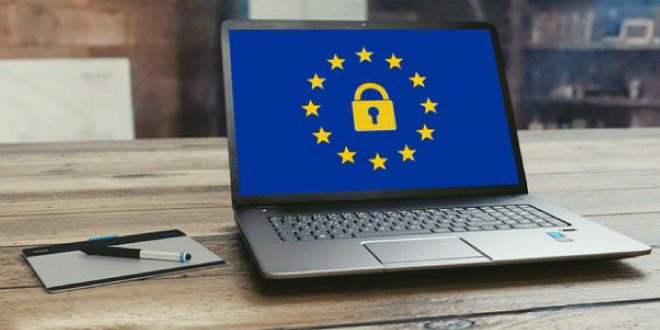
“Data protection is a freedom right” this message was sent by the Guarantor for the Protection of Personal Data that informs citizens about new content in defence of privacy. With the arrival of May anxiety increases. The Gdpr has undermined all, from SMEs to large multinationals, without exception.

GDPR Overview

The UE 2016/679 Regulation will enter into force on 25th May 2018. The GDPR, General Data Protection Regulation, introduces new methods for processing personal data with more decisions from users. You may have noticed the message launched by social networks communicating the changes provided in the regulation and inviting users to read and agree to the new terms within an established date in order to continue using the service.

The Regulation will provide many innovations for users, companies, public and private entities, free professions and associations, to put a brake on excessive use of data, more or less voluntarily given by the users, on the web.

Let see:

  • Pseudonymisation: Data protection by design and by default. Data protection by design and secure by default belongs in article 25 of GDPR. The data controller must process the data in order to ensure and to clarify to the owner the modalities and purposes related to that specific data. Blockchain is the technology that can best support this claim as in the chain are stored data that are not related to the individual.
  • Accountability: It is the main principle for public and private companies that have to communicate the violation of personal data to control authority (data breach) that could cause physical, material or immaterial damns to individuals; otherwise substantial penalties will be faced.
  • Data Protection Officer: who works with the data controller. GDPR Art.37 established that the data protection officer intervenes when data processing is carried out by a public authority, when regular and systematic monitoring is needed on a large scale or when treatment involves special categories of personal data.
  • Data portability. Your personal data may be transferred from one processor to another. Obviously not referring to personal data but to particular categories of data that may not be transferred to non-European countries or organizations which do not meet the safety standards for the protection.
  • Right to be forgotten. Anyone can withdraw consent to use personal information when data are no longer needed for established goals or in cases where the person wants to delete personal data from archives and third-party database, with no exceptions.

These are just some of the changes introduced by GDPR which ensures the privacy of users with regard to the processing and free movement of personal data.

GDPR Checklist

There are several practices which public and private companies, small businesses and large corporations must adopt. First of all, the entities involved in processing of personal data must inform user about using the data collected, the methods and the purpose of treatment clearly and simply avoid leaving space to misunderstandings.

The data will no longer be visible only to a single machine so in order to be compliant a distributed system for GDPR and accessing data has to be defined, like a Cloud system that will avoid you to suffer penalties equal to 4% of turnover and to stumble in improvised solutions which do not meet the requirements.
Companies also must update their own Privacy Policy, review the forms, adapting all treatments and appoint a data protection officer to be ready for the new challenges of an increasingly technological future and quick to respond to needs of individuals, public and private entities.